Theme 11 — modern
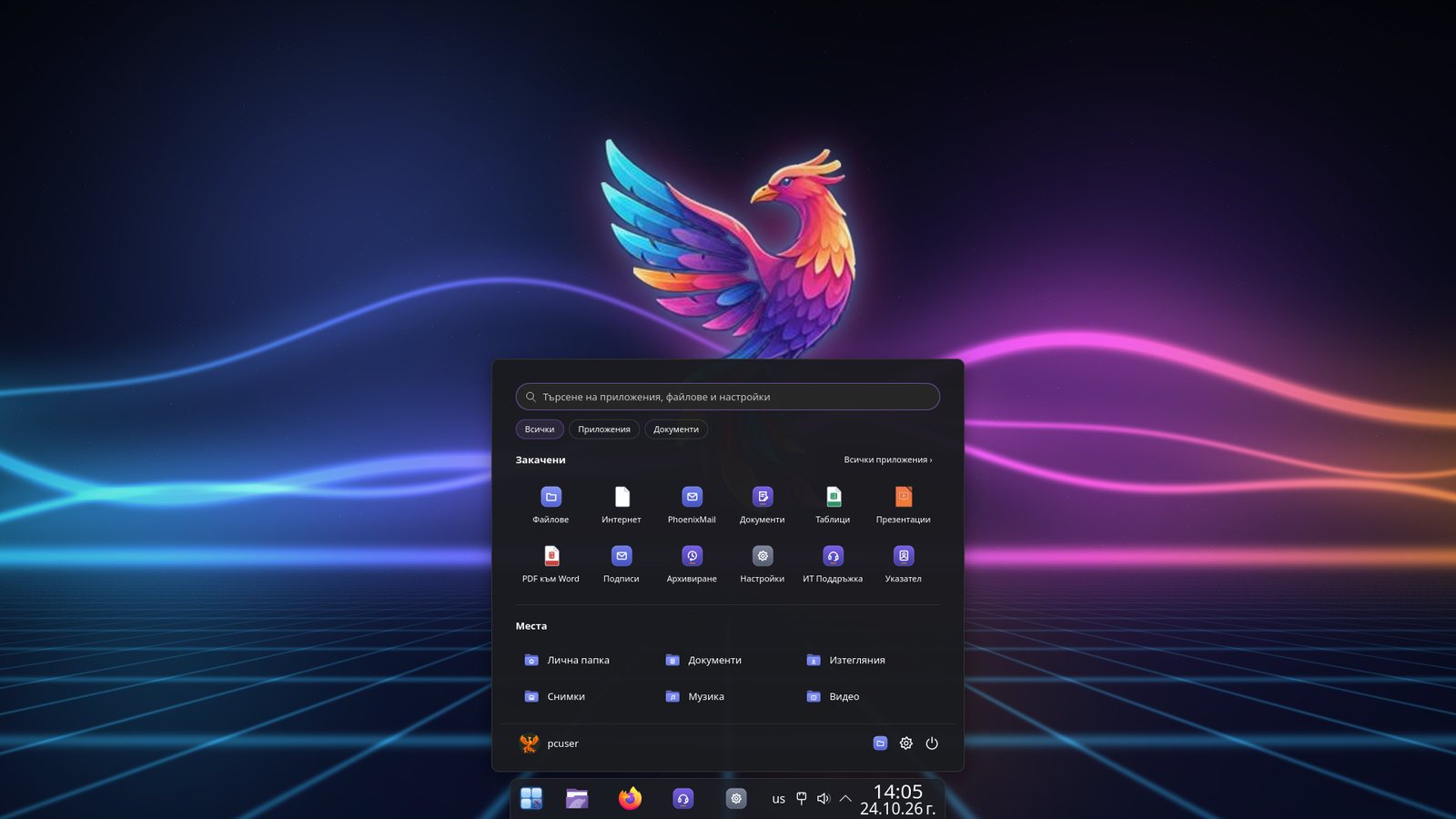
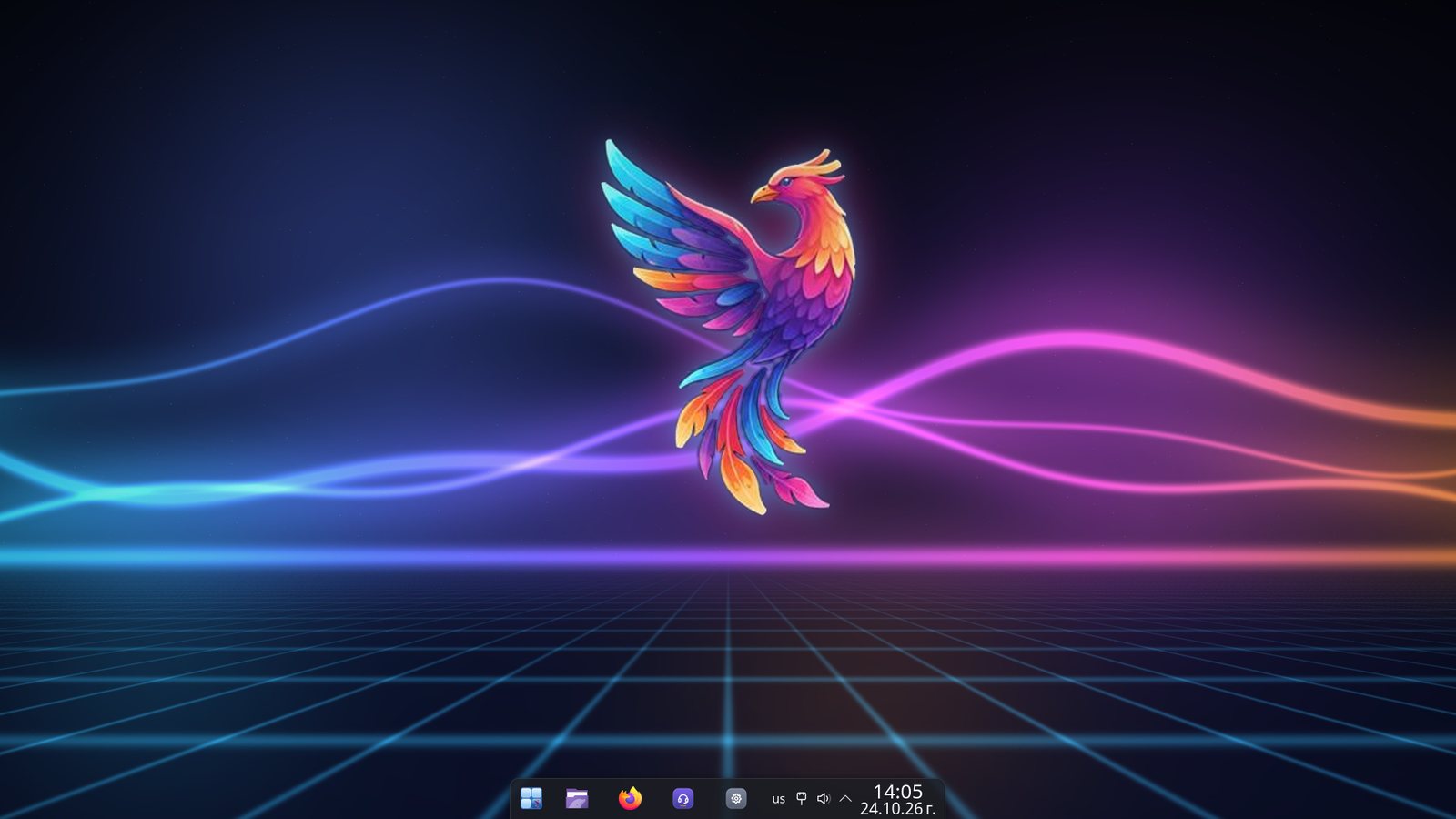
Centred, rounded, quiet. Everything one click away.
Development preview · 0.7.0-dev.4
 PhoenixCore OS
Built for compatibility. Designed for control.
A Linux-based operating system in active development, focused on everyday usability, dependable administration and long-term maintainability.
Explore FeaturesDevelopment Progress
Not yet publicly available — so far verified in controlled testing in isolated virtual machines.

Desktop experience
Built on Debian 13 and KDE Plasma, with its own installation, everyday experience, administration and recovery. Modern or classic layout, light or dark — and a calm, separate space for administration.
Centred, rounded, quiet. Everything one click away.
Development preview · 0.7.0-dev.4
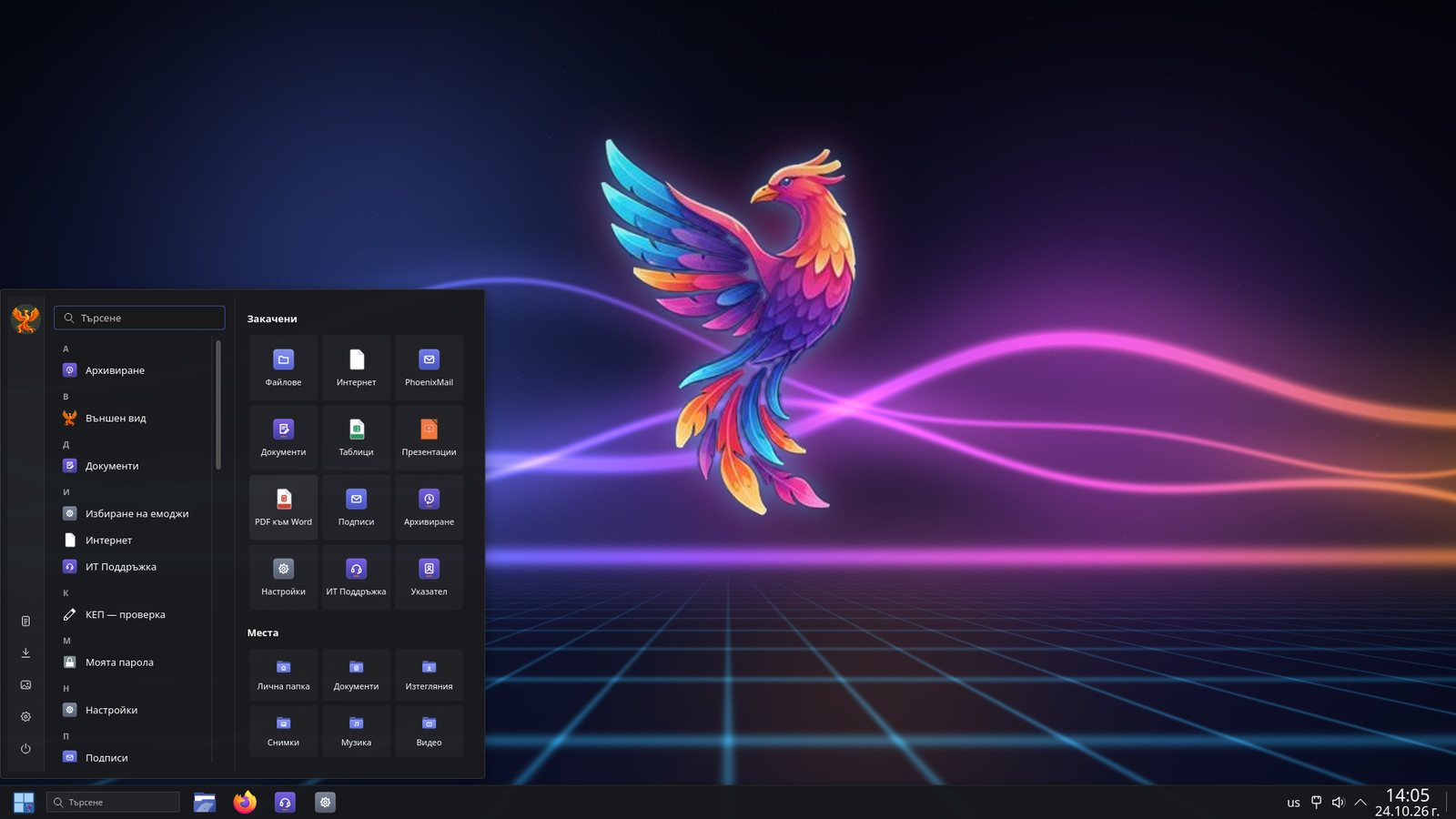
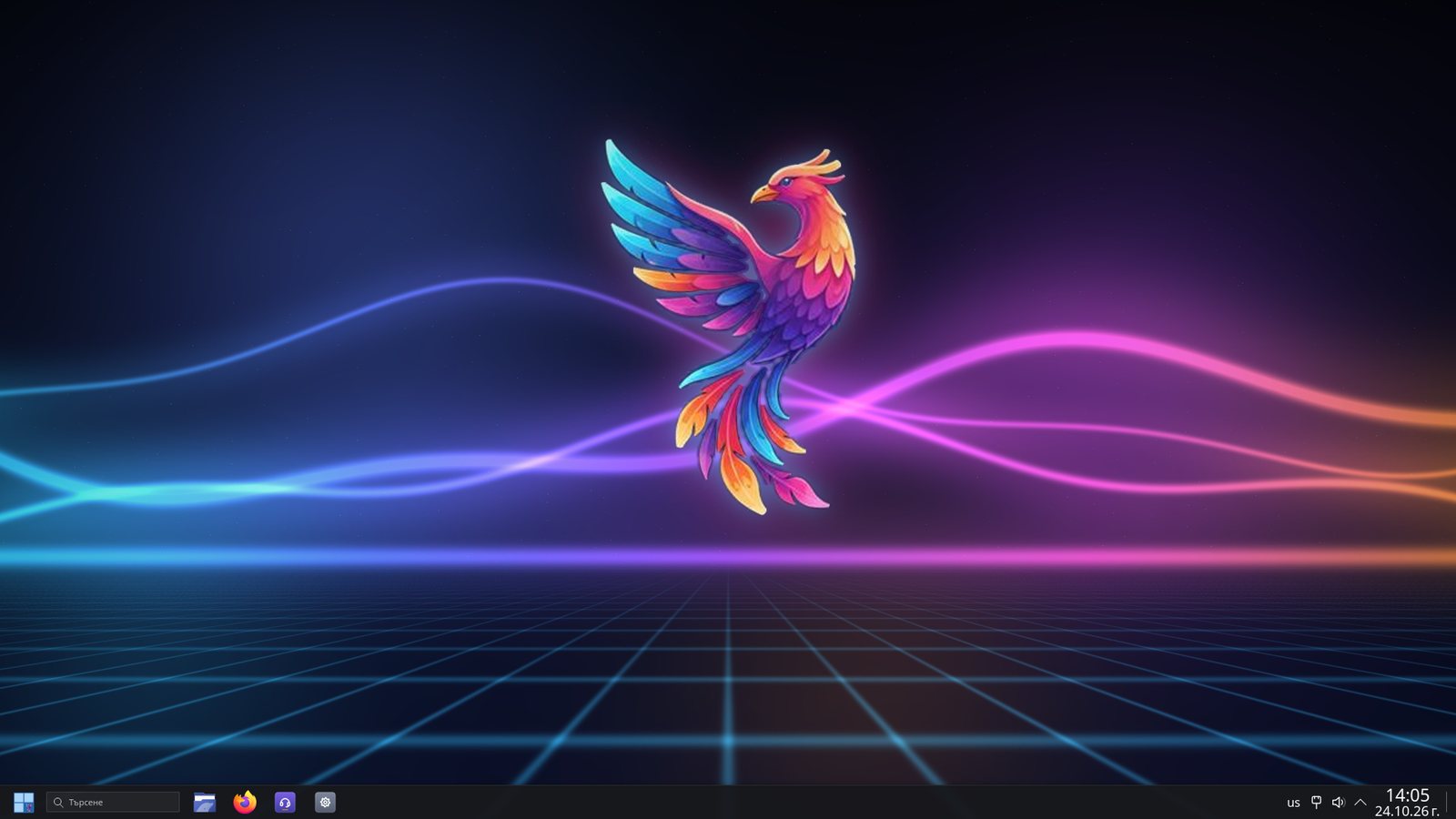
Start on the left, the taskbar across the bottom. Familiar from the first minute.
Development preview · 0.7.0-dev.4
A separate, uncluttered space for looking after the system.
Development preview · dev.20
Your apps, your search, your places — in copper and graphite.
Development preview · 0.7.0-dev.4
Features
In plain words: what already works in controlled testing, what is being developed and what is planned. Every item carries its own status.
In active development
Aims to run on existing hardware. So far verified only in tested virtual configurations, including one without TPM; qualification on physical devices is ongoing.
Verified in controlled testing
Modern or classic layout, light or dark, on Debian 13 and KDE Plasma.
Verified in controlled testing
Everyday users work without unnecessary privileges; the IT administrator has a separate account.
In active development
Recovery-oriented design with a recovery boot; smoother recovery is still being developed.
Verified in controlled testing
A separate user-data area was kept while the system partition was replaced. Public reinstallation is not enabled yet.
Verified in controlled testing
Local help topics for administrators in Bulgarian and English, available without an internet connection and built into the system help centre. Verified in virtual machines; not yet available in any publicly distributed release.
Planned
Organisational administration and device management for IT teams.
Feels familiar from the first minute and looks unmistakably like PhoenixCore.
Developed with clearly separated user and administrator responsibilities, allowing maintenance without granting unnecessary privileges to everyday users.
Made to run on the computers people already have — without unnecessary hardware lockouts.
A recovery-oriented storage architecture designed to make future system replacement and maintenance possible without unnecessary loss of personal files.
Works on its own, on your computer, without depending on a remote service.
Development progress
Seven milestones from foundation to public preview. Select a milestone to read more. Verified in a virtual machine does not yet mean ready for everyday use.
Verified in controlled testing
Debian 13 and KDE Plasma as a stable, open base, with PhoenixCore's own visual identity.
Verified in controlled testing
Graphical installation, desktop operation and application navigation designed around the user — verified in controlled testing.

Verified in controlled testing
Distinct USER and ADMIN configurations, with separate local IT administrator accounts on USER machines.
In active development
AMD and Intel enablement integrated and basic operation verified on virtual hardware; qualification on physical devices is ongoing.
In active development
Separate user data, encrypted user data and recovery keys validated in laboratory scenarios; safe reinstallation is in development.
Planned
Guided migration from Windows to PhoenixCore and more comprehensive printer and scanner support.
Planned
Organisational administration, managed application deployment and preparation for a public preview.
The roadmap describes intentions, not delivery promises. No dates are announced.
Hardware compatibility
Modern machines and selected older ones alike — PhoenixCore OS aims to run well without excluding compatible hardware.
Integrated drivers do not prove that every physical device has been tested. No compatibility guarantees are given for specific vendors or models.
Security & recovery
Your files deserve a safe place, and your computer deserves a way back. PhoenixCore OS is designed around both.
A recovery-oriented storage architecture designed to make future system replacement and maintenance possible without unnecessary loss of personal files.
In controlled virtual-machine testing:
Public reinstallation is not enabled yet. Unrecognised application data and older configurations still need further work.
Security features should strengthen a system without unnecessarily excluding compatible hardware.
The workplace of the future should do more than simply work. PhoenixCore Enterprise is being developed with a new generation of mechanisms for technical resilience, predictable operation and faster recovery from certain system problems.
Fewer interruptions. More control. Technology that works quietly in the background.
Personal data protection is built into the architectural principles of PhoenixCore OS. System diagnostics are being designed to use only the minimum technical indicators needed, without analysing the content of personal documents, email or user conversations. PhoenixCore Enterprise is being developed with attention to GDPR principles and to the organisation’s control over its own data.
These are development goals, not certified or conclusively proven functionality.
Gallery
Real archive screenshots from earlier development builds. They show the direction of the design — not the latest interface. Select any image to see it full size.
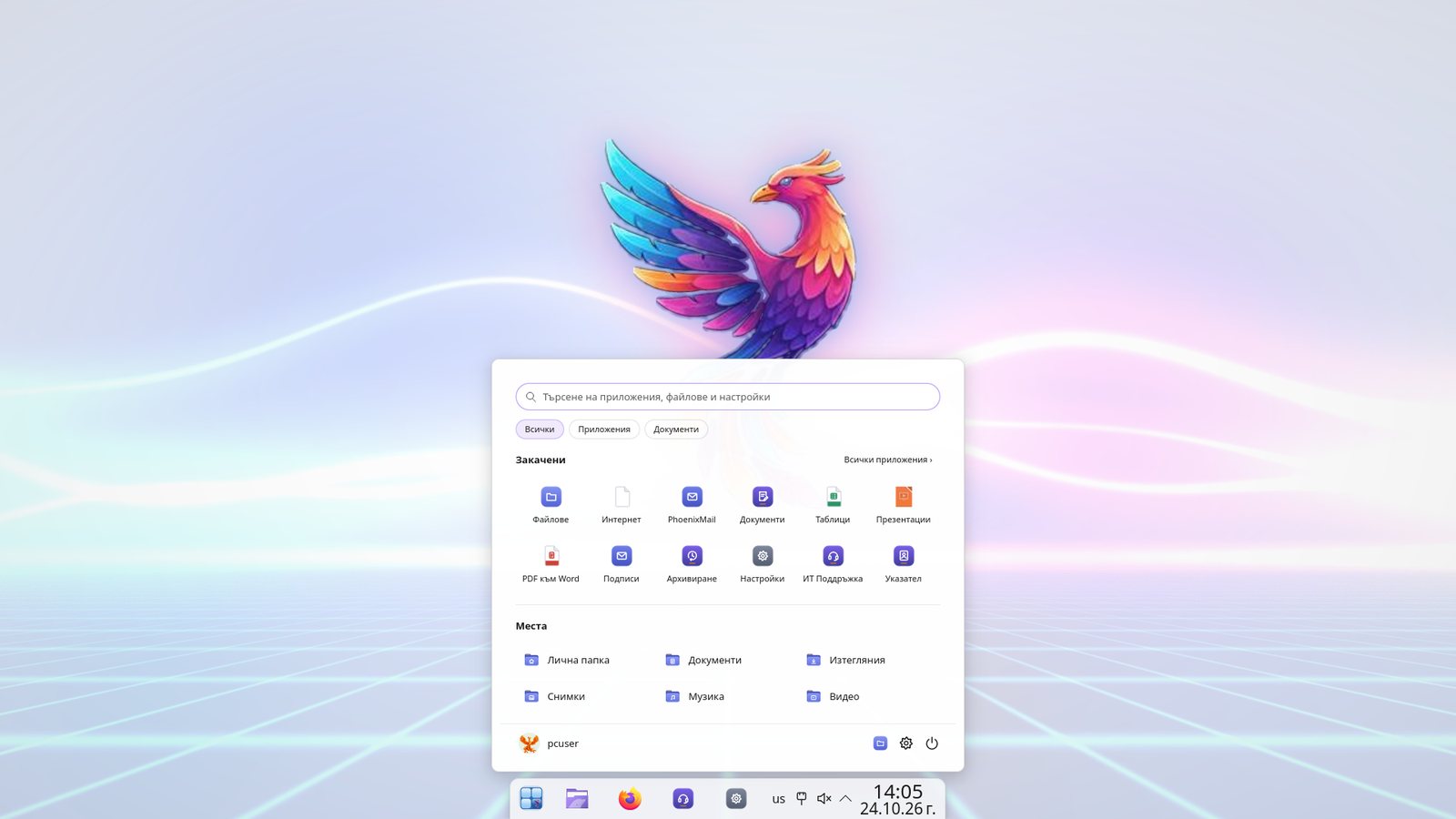
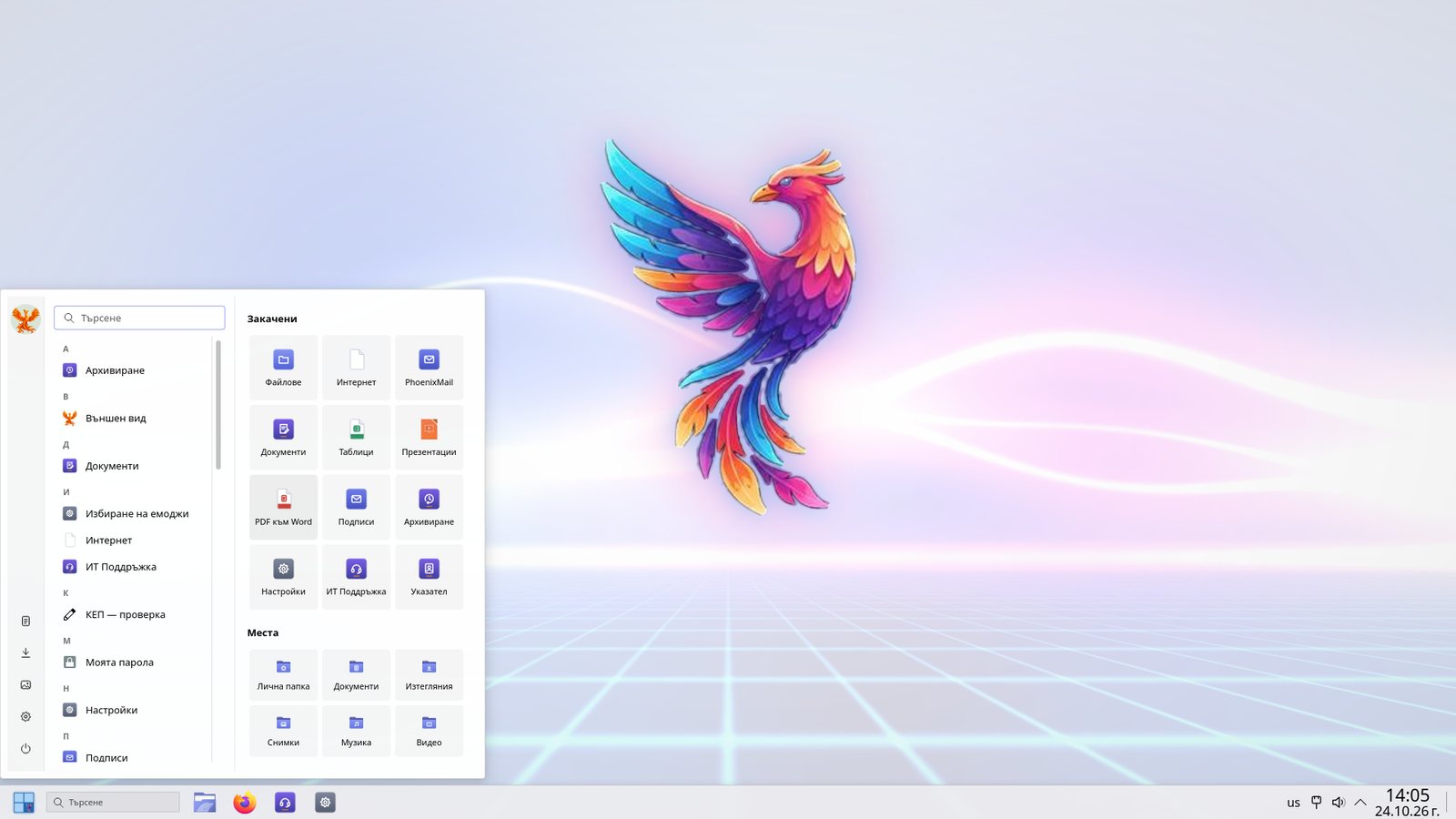
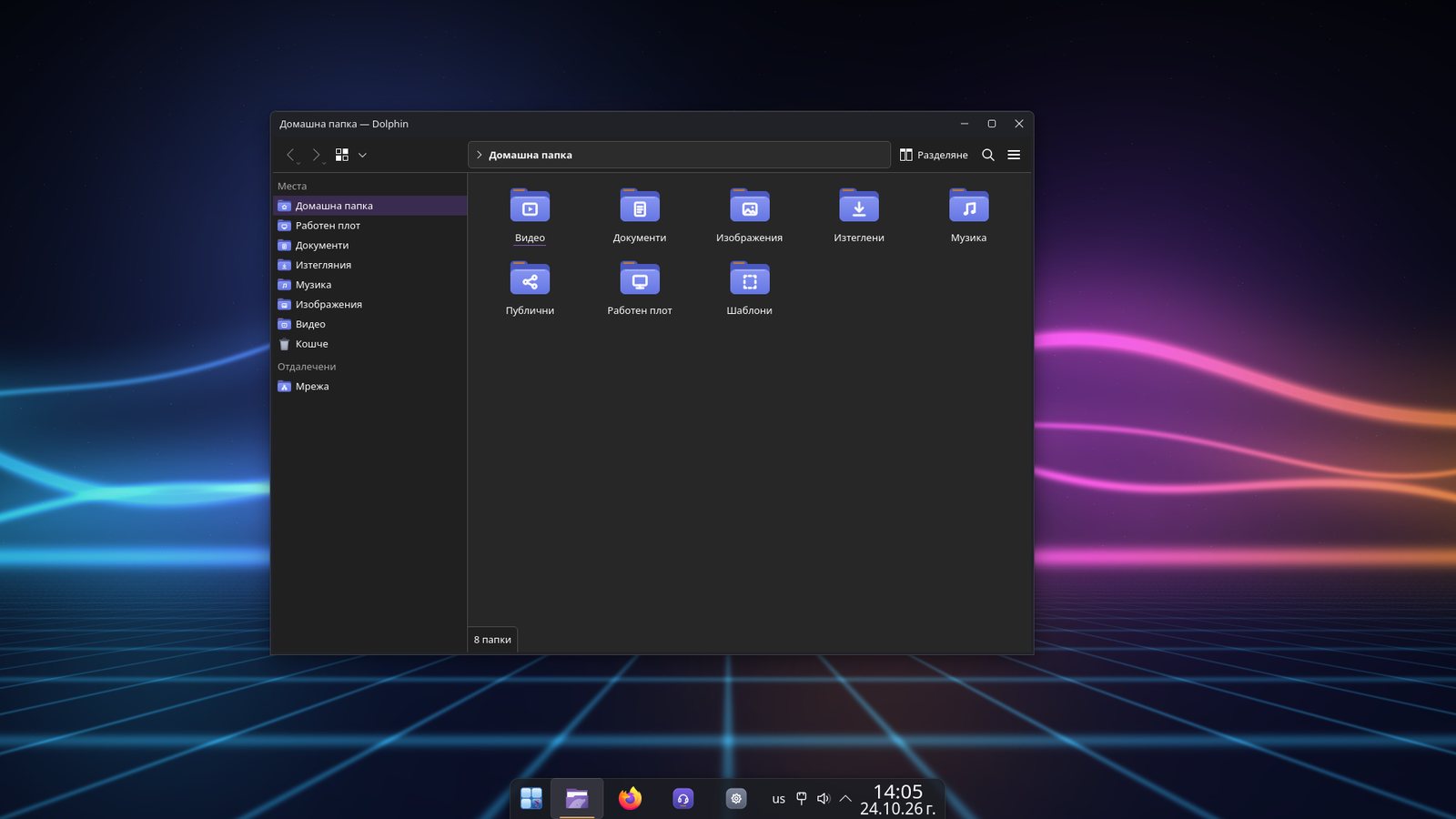
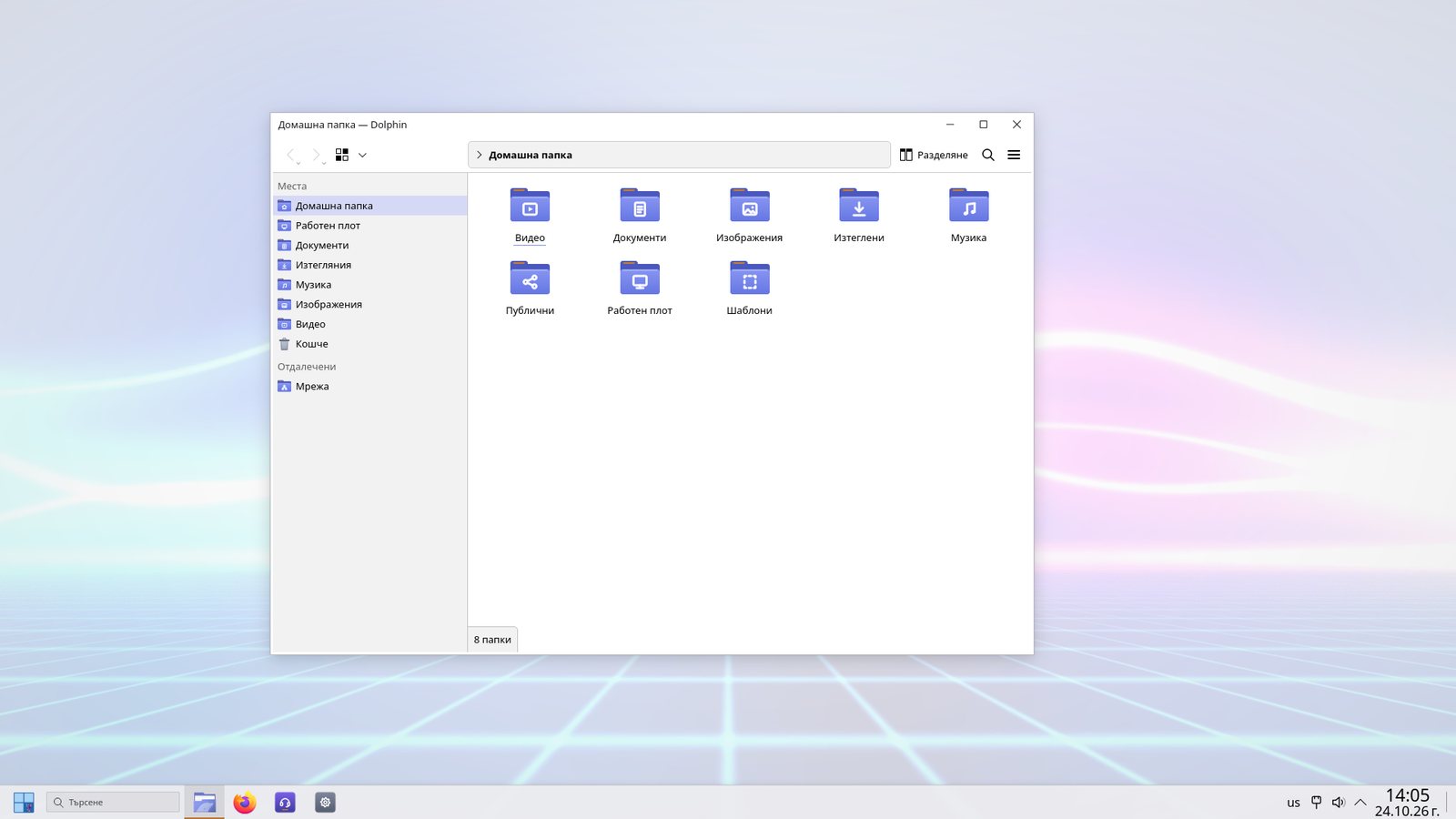
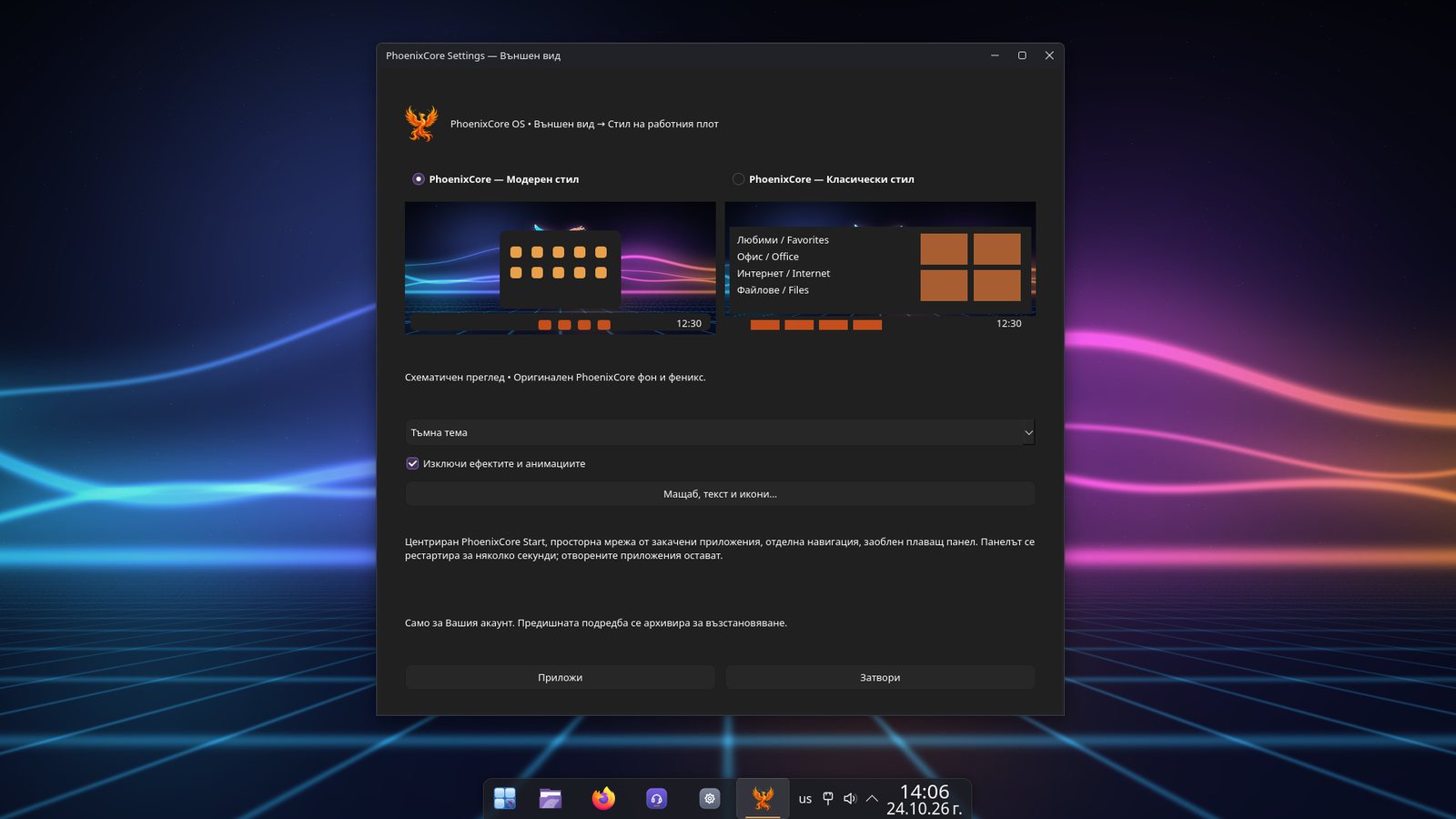

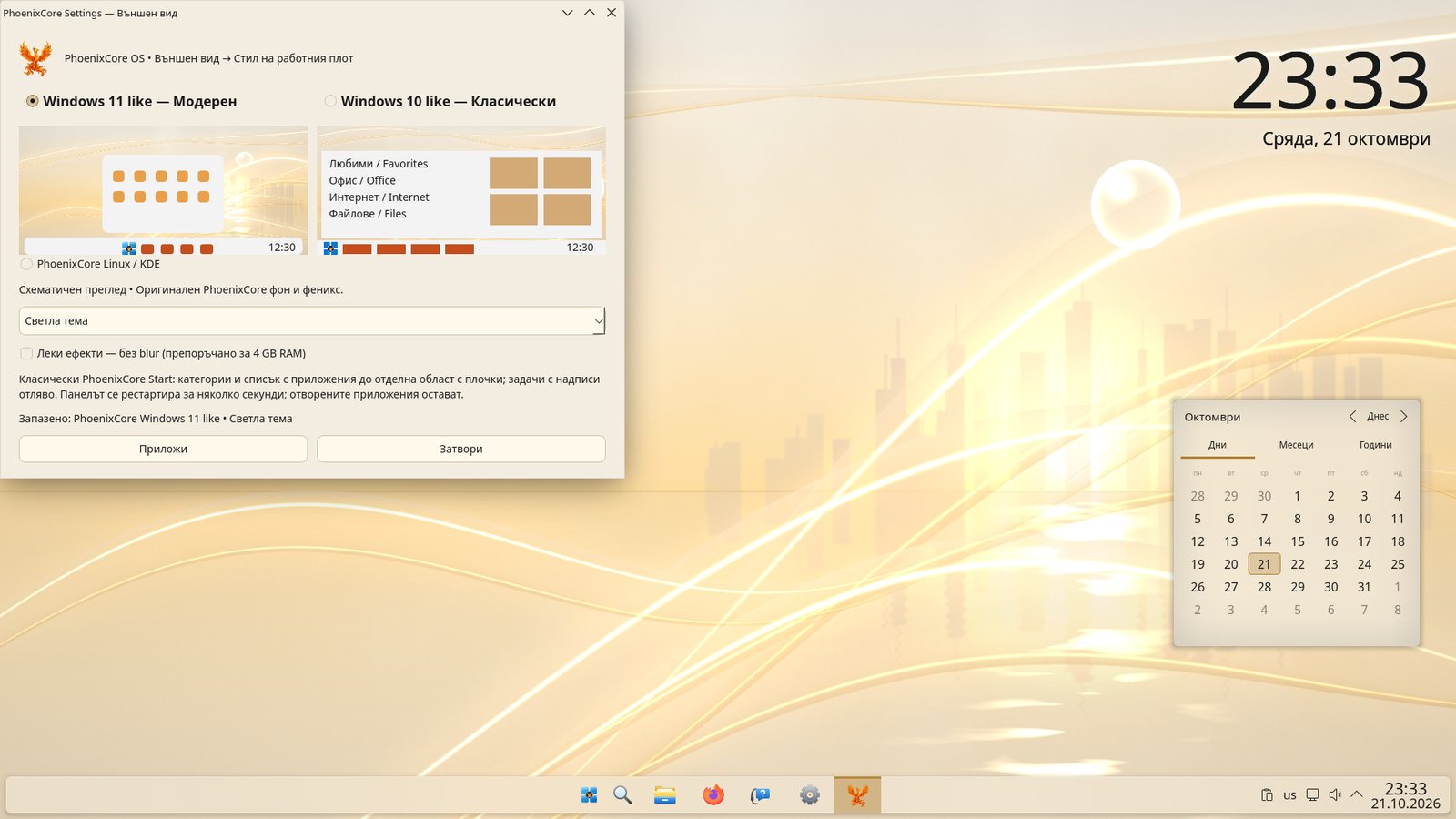
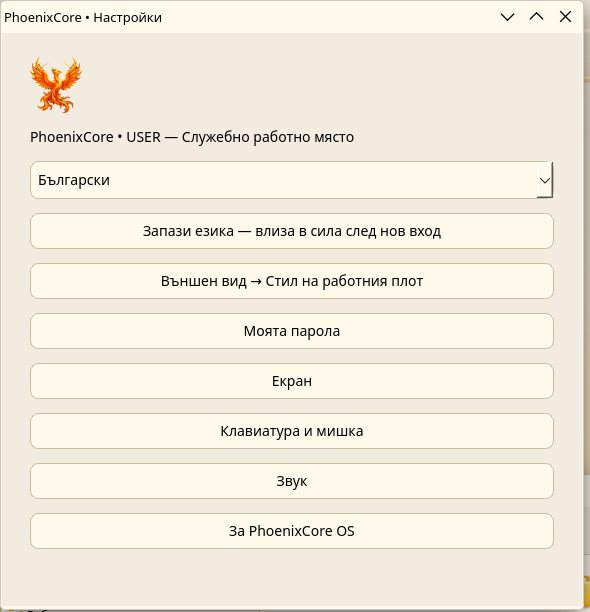
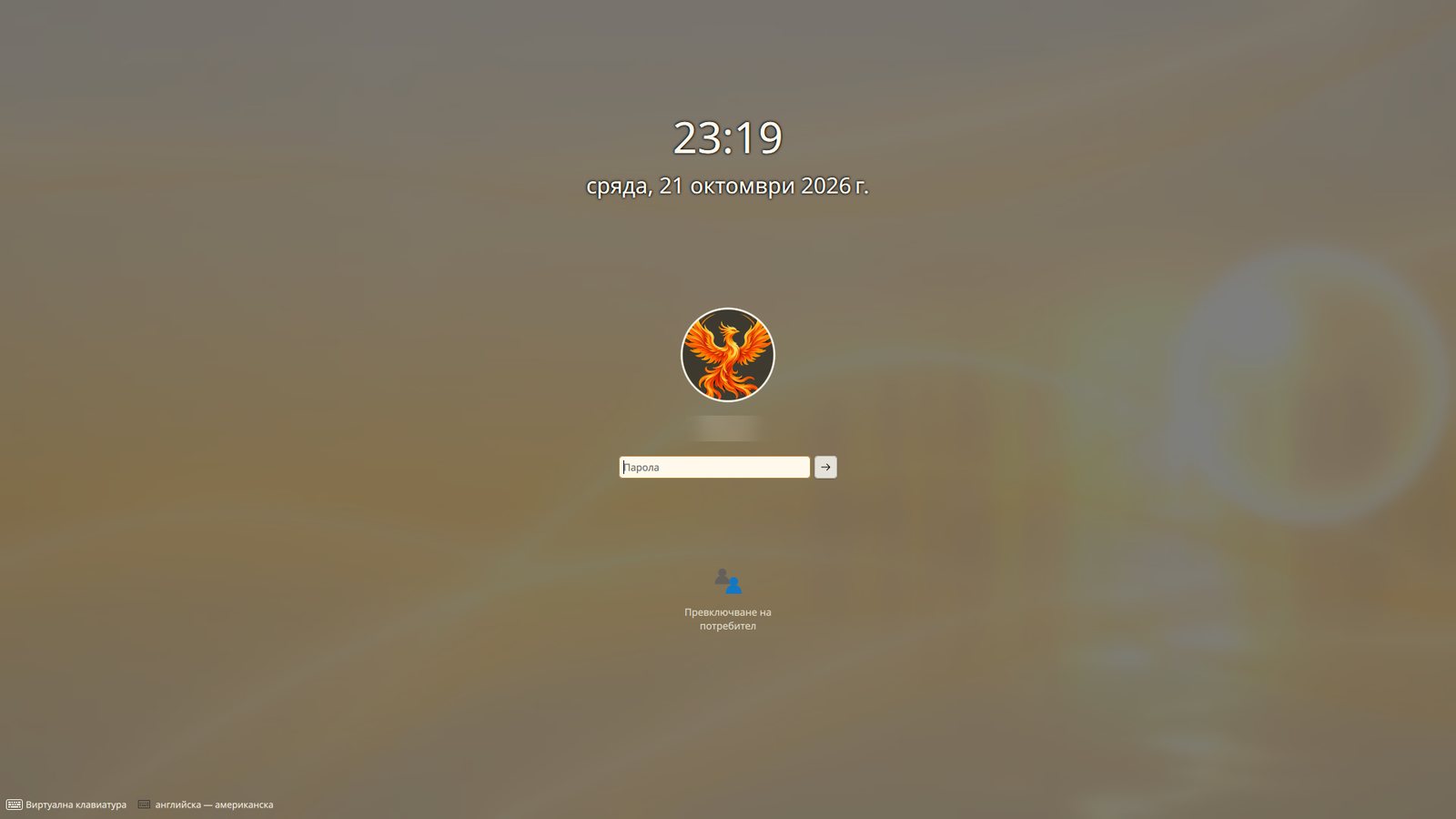
Archive screenshots from development. Design and features may still change before public availability.
Early Testers
PhoenixCore OS is preparing for a future community and hardware-testing phase. We aim to work with interested users and IT professionals to evaluate installation, device compatibility, desktop usability and recovery features on a wider variety of systems.
Tester Program — Coming Soon
Details about eligibility, participation and test builds will be announced when the testing program is ready.
FAQ
Not yet. PhoenixCore OS is not publicly available.
Yes — PhoenixCore OS is built on Debian 13, with KDE Plasma as its desktop.
No. TPM 2.0 is not a universal requirement for baseline operation; hardware security features are treated as optional enhancements.
Supporting suitable older computers is a major goal. Results will depend on the specific components.
AMD and Intel hardware-enablement foundations are integrated. Qualification on physical devices is ongoing.
NVIDIA graphics are an ongoing compatibility area. There is no production qualification yet.
We don't claim that. The goal is a dependable alternative for suitable use.
Guided migration from Windows is planned. It is not publicly available.
This has been demonstrated in controlled laboratory testing. A public reinstallation workflow is not enabled yet.
No. PhoenixCore OS is not yet generally released or production-qualified.
A tester program is planned for the future. Details will be announced when it is ready — there is nothing to register for now.
Project updates
PhoenixCore OS continues to take shape as a Linux-based operating system built for compatibility, straightforward administration and long-term maintainability. Here is what has been reached in controlled testing, and what comes next.
Graphical installation, the desktop with PhoenixCore's visual identity and user-oriented application navigation were verified in isolated virtual machines. Separate USER and ADMIN machine profiles were tested, and a standard user and a separate IT administrator were checked through real graphical sign-in and sign-out.
AMD and Intel firmware and microcode foundations are integrated, and basic operation was verified on deliberately restricted virtual hardware — including a configuration without TPM and without mandatory modern CPU instruction extensions. Qualification on physical devices comes next; integrated drivers alone do not prove that every device works.
In laboratory testing, the system partition was replaced while a separate user-data area was kept. Accounts and permissions, verified files and their metadata were preserved, and encrypted user data was unlocked with independent recovery credentials. A public reinstallation workflow is not enabled yet.
Safe reinstallation with application-data preservation, broader driver compatibility, qualification on physical devices, smoother installation and recovery, and expanded printing and scanning.
A future Early Testers program is being prepared for interested users and IT professionals. Details will be announced when it is ready; there is nothing to sign up for yet.
Every step aims at one thing: a dependable system you can trust with your everyday work. Thank you for following PhoenixCore OS.
Vision
A Linux-based operating system focused on reliability, hardware compatibility, straightforward administration and long-term maintainability — for personal workstations and organisational environments.
PhoenixCore OS is created by Alexander Hristov (RitualForge Labs). Its foundation is Debian GNU/Linux and KDE Plasma; these and the other open-source components are the work of their respective communities and are distributed under their own licences.
Runs on the computers you have, with no unnecessary hardware lockouts.
Changes you can anticipate, not surprises.
Your computer works on its own, without depending on a remote service.
Everyday users work freely; administrators look after the system.
Personal files kept apart from the system and designed to survive maintenance.
Recovery-oriented design, long-term serviceability and everyday usability.
Project status
PhoenixCore OS is in active development. Its core capabilities have been verified in isolated virtual machines. It is not production-ready, and there is no public release yet.
Development builds are not intended for production use or for installation on everyday computers. Public availability will be announced when it is ready.
PhoenixCore OS is currently in active development and testing. The current test builds provide Bulgarian and English language support in the core interfaces.
Full multilingual localisation is planned for future releases, allowing users to experience the operating system in their preferred language.
Built for compatibility. Designed for control.
For questions about the project and collaboration, write to us at: